
CNC Machining vs Manual Machining: Pros and Cons

Key takeaways
- CNC wins on repeatability, complex shapes and volume; manual wins on one-offs, repairs and low investment.
- The real cost of CNC is machine plus programming, tooling and training – plan for all four.
- Many shops run both: CNC for production, manual machines for fixtures, repairs and quick jobs.
In modern manufacturing, machining processes are essential to creating high-precision components. Two primary methods dominate this space: Computer Numerical Control (CNC) machining and manual machining. While both serve critical roles, they differ in automation, precision, and cost. Whether you're prototyping a single part or scaling production to thousands, choosing the right method can greatly affect your results.
What Is CNC Machining?
CNC machining uses computer-controlled tools to remove material from a workpiece with exceptional accuracy. Programs written in G-code instruct machines like mills, lathes, or routers to make precise, repeatable movements across multiple axes.
Key Features of CNC Machining:
- Automation: Machines run unattended once programmed.
- Repeatability: Ensures consistent results in large batches.
- Multi-Axis Capability: Enables 3–5 axis cutting for complex shapes.
Pros of CNC Machining
High Precision & Consistency
- Achieve tolerances as tight as ±0.005 mm.
- Ideal for aerospace, medical, and automotive applications.
Complex Geometries
- Create parts with undercuts, deep cavities, or freeform curves.
- 5-axis machines enable machining in fewer setups.
Efficiency & Speed
- Fast setup and cycle times for mass production.
- Suitable for “lights-out” manufacturing with minimal oversight.
Reduced Labor Costs
- One technician can manage multiple machines.
- Less human error once the program is validated.
Cons of CNC Machining
High Initial Investment
- A CNC machine is a significant investment – from a few lakh rupees for a basic used lathe to several crores for large multi-axis machines.
- CAM software and training add to startup costs.
Programming Time
- Complex parts require hours of G-code programming and testing.
Maintenance & Downtime
- Requires regular calibration and skilled technicians for upkeep.
Less Flexible for Quick Changes
- Design revisions need program updates and re-verification.
What Is Manual Machining?
Manual machining relies on skilled operators using hand-controlled machines like mills and lathes. The operator sets speeds, feeds, and tool paths in real time, based on experience and intuition.
Key Features of Manual Machining:
- Human Control: Operators adjust parameters on the fly.
- Simpler Machines: Typically 2–3 axis operation.
- Skill-Based: Heavily reliant on machinist knowledge.
Pros of Manual Machining
Lower Upfront Cost
- Manual mills and lathes cost a fraction of CNC machines.
- Little to no software needed.
Great for Prototyping & One-Offs
- Fast setup for basic parts.
- Easy to tweak dimensions during development.
Operator Flexibility
- Skilled machinists can adapt and troubleshoot quickly.
Builds Fundamental Skills
- Essential for machinists in training.
- Offers a tactile feel for materials and tooling.
Cons of Manual Machining
Limited Precision & Repeatability
- Typical tolerances are around ±0.05 mm.
- Variation increases with operator fatigue.
Slower Production Rates
- Each part must be handled individually.
- Not practical for large-scale production.
Labor-Intensive
- High time investment per part.
- Not cost-effective for repetitive tasks.
Geometric Limitations
- Cannot easily produce complex, multi-axis parts.
How to Choose the Right Method
| Factor | CNC Machining | Manual Machining |
|---|---|---|
| Quantity | Best for medium to large production runs | Ideal for prototypes and low-volume jobs |
| Complexity | Handles multi-axis, intricate parts | Best for simple, prismatic parts |
| Tolerances | Delivers ±0.005 mm or better | Acceptable for ±0.05 mm applications |
| Cost Structure | High initial cost, low per-unit cost | Low startup cost, high per-unit labor cost |
| Lead Time | Longer prep, faster runs | Quick to start, slower for multiple parts |
Need a machine for this?
Tell us your part, material and quantity. We will suggest suitable new and used machines with prices.
Questions about this topic
Is CNC machining always better than manual machining?
No. CNC is better for repeat batches, tight tolerances and complex shapes. Manual machines are still quicker and cheaper for one-off repairs, simple parts and toolroom work.
Is a used CNC machine a good first step from manual machining?
Often, yes. A well-checked used CNC lathe or VMC lowers the investment while your team learns programming and setting.
How long does it take to train a manual machinist on CNC?
A skilled machinist usually learns basic operation and offsets within a few weeks; confident programming takes longer and improves with CAM software.
Machines related to this guide
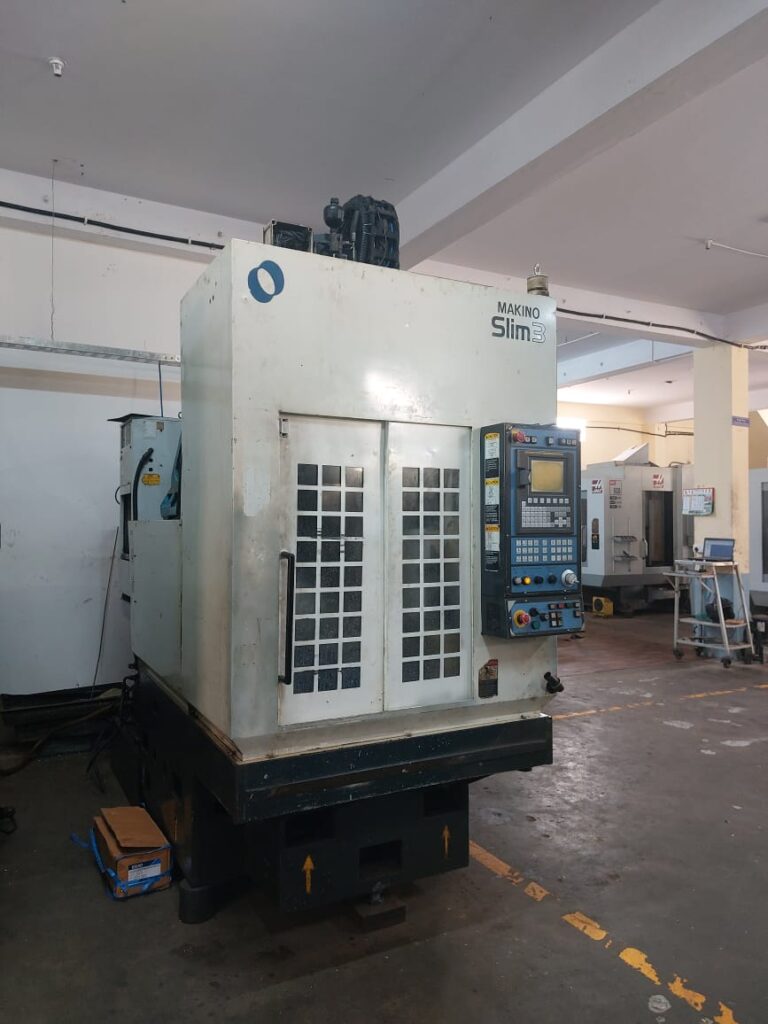
CNC Lathes & Turning Centres
ACE Jobber LM CNC Lathe with Steady Rest (2020)
- Year 2020
- Control Fanuc
- Chuck 200 mm
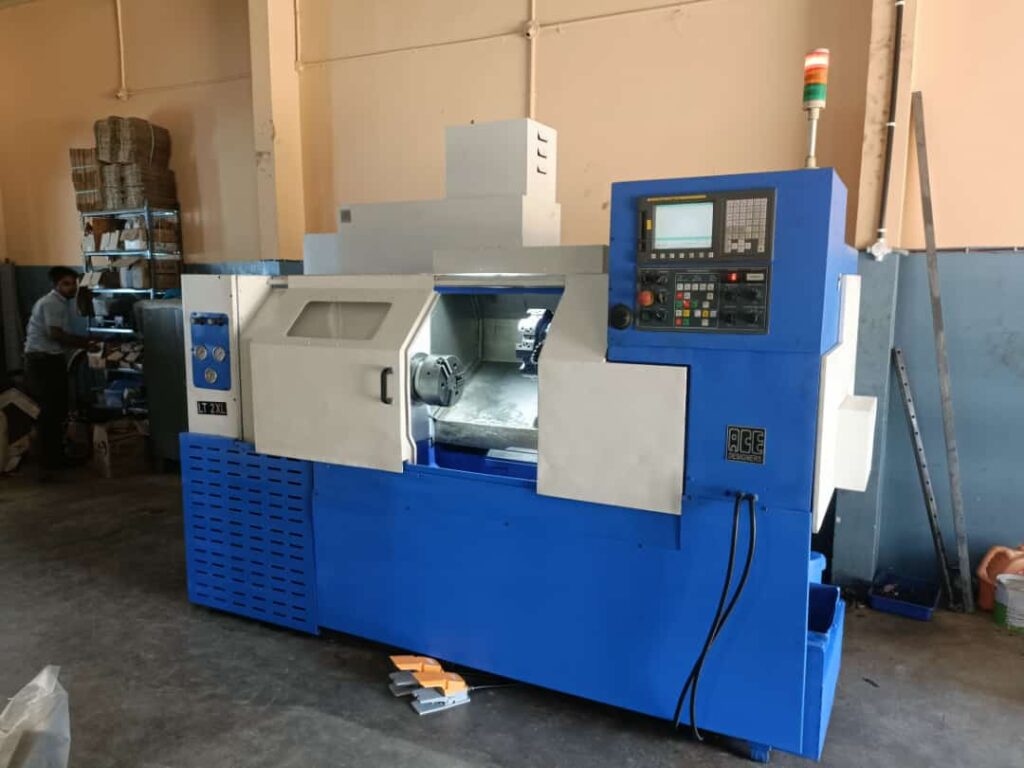
CNC Lathes & Turning Centres
ACE LT-2 XL CNC Lathe, Fanuc Retrofit (2004)
- Year 2004
- Control Fanuc 0i Mate-TD, retrofitted in 2013…
- Turning Ø 240 mm

CNC Lathes & Turning Centres
ACE Micromatic Jobber J 300 LM CNC Lathe (2017)
- Year 2017
- Control Fanuc
- Chuck 165 mm, hydraulic

No machines match these filters. Tell us what you need and we will find one.
Talk to a CNC machine specialist
Send a drawing or just the part size and quantity – we will tell you which machine fits and what it costs.