
Key Benefits of CNC Machines for Modern Manufacturing

Key takeaways
- CNC machines hold tolerances part after part, cutting scrap and rework.
- Automation – bar feeders, pallet changers, probes – multiplies output per operator.
- 4- and 5-axis machines reduce setups and handling on complex parts.
In today’s fast-paced manufacturing world, CNC (Computer Numerical Control) machines are more than just tools — they are the engine of precision, efficiency, and scalability. Whether you’re running a high-volume production line or prototyping a single aerospace part, CNC machining delivers unparalleled advantages.
Here are the top benefits of CNC machines and why they remain vital in the age of smart manufacturing.
1. Unmatched Precision & Consistency
Tight Tolerances
- CNC machines routinely achieve tolerances down to ±0.005 mm, making them ideal for medical implants, aerospace components, and tight-fitting mechanical assemblies.
Repeatability
- Once a program is validated, it can produce thousands of identical parts, ensuring reliability across batches.
Example: CNC is used in orthopedic device production where every part must fit perfectly into the human body — every time.
2. Higher Throughput & Efficiency
Lights-Out Operation
- Run machines unattended overnight or through the weekend — a practice known as "lights-out manufacturing" — to maximize output without adding labor costs.
Fast Changeovers
- Automated tool changers, pallet systems, and fixturing drastically reduce setup time between jobs, ideal for multi-part workflows.
3. Complex Geometry & Multi-Axis Capability
4- & 5-Axis Machining
- Enables the creation of complex shapes like turbine blades, mold cavities, and undercuts in a single setup.
Integrated Multi-Functionality
- Many CNC centers combine milling, turning, tapping, and drilling in one machine, minimizing the need for multiple setups or fixtures.
4. Reduced Waste & Material Optimization
Smart Toolpaths
- CAM software generates adaptive toolpaths that reduce air-cutting and excessive material removal.
Collision Avoidance
- Advanced simulations and sensors help prevent tool crashes and part scrap, protecting tooling and raw materials.
Insight: This translates to significant cost savings when working with expensive materials like titanium or Inconel.
5. Lower Labor Costs & Training Time
Operator Efficiency
- A single operator can manage multiple CNC machines, compared to the one-operator-per-machine model in manual machining.
Simplified Training
- Intuitive CAM interfaces, presets, and simulation tools allow new operators to become productive in weeks, not months.
6. Enhanced Safety
Enclosed Workzones
- Most CNC equipment features full guarding, chip control, and mist extraction systems, reducing direct operator exposure.
Automatic Safety Protocols
- Machines are equipped with tool breakage detection, overload monitoring, and emergency stop functions.
7. Seamless Digital Integration
Industry 4.0 Compatibility
- Modern CNC systems support IoT devices, predictive maintenance, and real-time data analytics to drive continuous improvement.
CAD to CAM Workflow
- Direct digital transfer from CAD software (e.g., Fusion 360, SolidWorks) to the CNC controller eliminates transcription errors.
8. Scalability & Flexibility
Prototype to Production
- CNC machines make it easy to test new designs and scale up instantly without changing platforms or tools.
On-Demand Manufacturing
- Enables short runs and low-volume production to be economically viable — perfect for startups, R&D, and mass customization.
Need a machine for this?
Tell us your part, material and quantity. We will suggest suitable new and used machines with prices.
Questions about this topic
Do CNC machines reduce labour costs?
Yes – one operator can run more than one machine, and less skilled operators can produce good parts once the program is proven.
Can CNC machines run unattended?
With bar feeders, loaders or pallet changers and good process control, many shops run lights-out for part of the day.
Is CNC worth it for small batches?
Often yes, because programs are stored and reused. For true one-offs, a manual machine may still be quicker.
Machines related to this guide
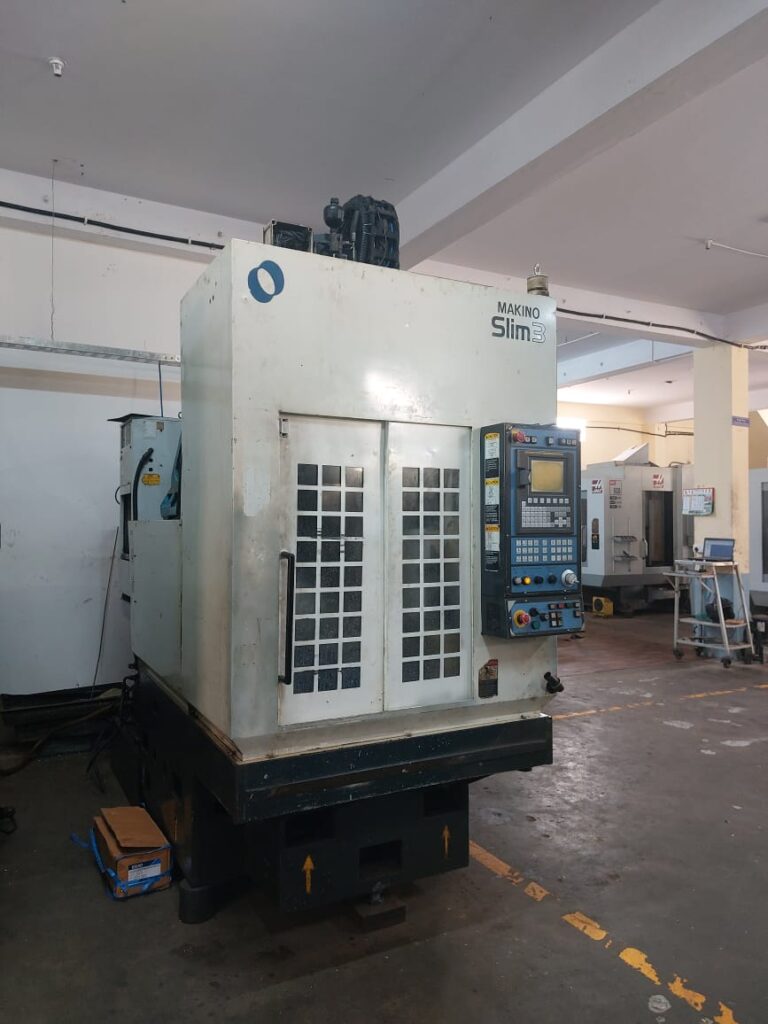
Vertical Machining Centres (VMC)
Makino Slim3 Vertical Machining Centre with 4th Axis (2008)
- Year 2008
- Control Fanuc 0i-MC
- Travel 500 / 400 / 400 mm

Vertical Machining Centres (VMC)
430 V Vertical Machining Centre
- Travel 400 / 300 / 400 mm
- Table 650 × 300 mm
- Taper BT-40
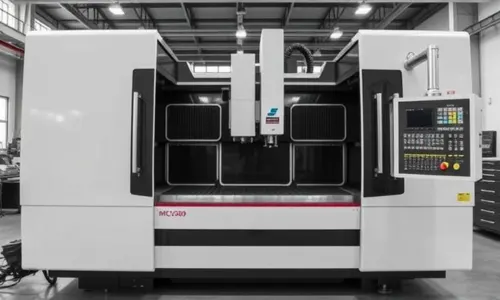
Vertical Machining Centres (VMC)
MCV300 Vertical Machining Centre
- Table 650 × 350 mm
- Travel 400 / 350 / 320 mm
- Taper 7/24 No. 40

Vertical Machining Centres (VMC)
MCV-350 Vertical Machining Centre
- Table 650 × 350 mm
- Travel 400 / 350 / 320 mm
- Taper 7 / 24 No. 40
No machines match these filters. Tell us what you need and we will find one.
Talk to a CNC machine specialist
Send a drawing or just the part size and quantity – we will tell you which machine fits and what it costs.